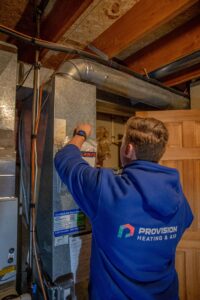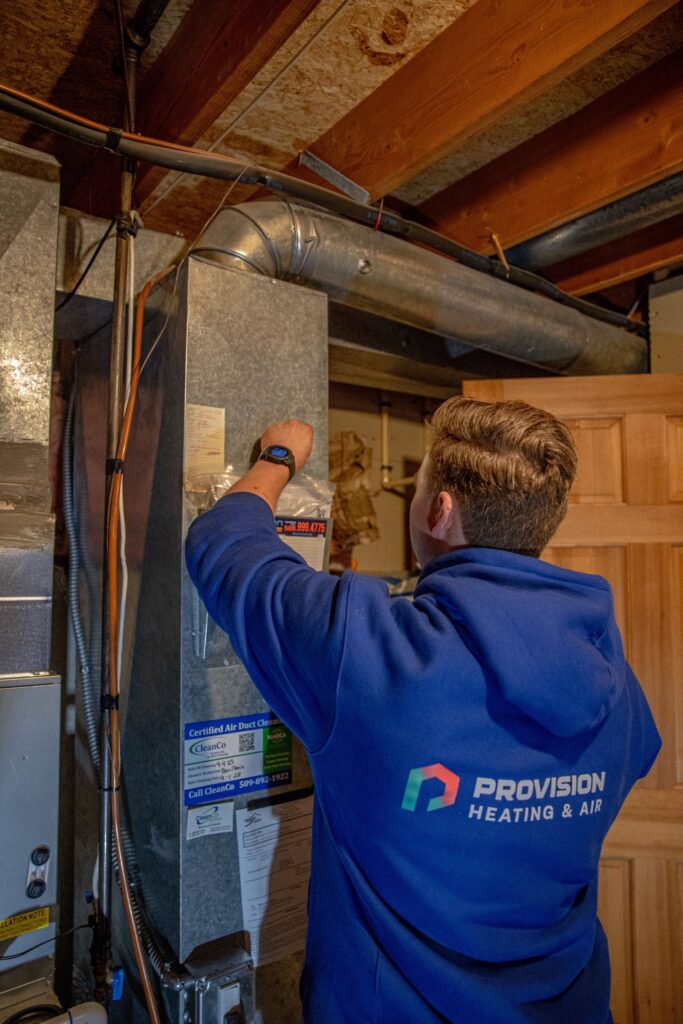
A lot of homeowners picture a furnace tune-up as a tech glancing at the unit, saying “looks fine,” and leaving in ten minutes. A real tune-up is not that. It is a full inspection and cleaning of the parts that wear out, get dirty, and quietly drive your gas bill up all winter.
So here is what actually happens during a proper visit for furnace maintenance in Spokane, step by step, in plain language. No mystery, no sales talk. Just what gets checked, what gets cleaned, and what you should hear from the tech before he leaves.
Step 1: The conversation comes first
A good tune-up starts with questions, not tools. Has the furnace been making any new noises? Are some rooms colder than others? Has the gas bill crept up compared to last winter? Your answers point the tech at the right places first, and they take two minutes.
Step 2: Thermostat and basic operation
The tech confirms the thermostat is calling for heat correctly and watches the furnace run a full cycle. Startup, ignition, warm air, shutdown. A system can “work” and still run badly, and a full cycle is where short cycling (turning on and off too often) and long, weak runs show themselves.
Step 3: The filter gets checked, and usually replaced
A clogged filter starves the furnace of air, makes it overheat, and wears the blower out early. If yours is loaded, it gets swapped (size is printed on the frame), and the tech will tell you honestly how often yours needs changing. Every house is different: pets, remodel dust, and how much the system runs all change the answer.
Step 4: Blower and airflow
The blower is the fan that moves warm air through your ducts. The tech inspects the blower wheel and motor, checks airflow, and looks for the dust buildup that slowly chokes the system. Weak airflow is why some houses have one toasty room and one room that feels like a porch in January.
Step 5: Burners, ignition, and the heat exchanger
This is the heart of the visit. The burners and ignition system get inspected and cleaned so the furnace lights reliably and burns cleanly. The heat exchanger (the metal wall that keeps combustion gases separate from the air you breathe) gets a visual inspection for cracks and rust. That check is not a formality. A cracked heat exchanger is a carbon monoxide risk, and it is exactly the kind of problem you want found in October, not discovered in January.
Step 6: Safety controls and the flue
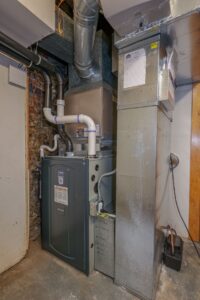
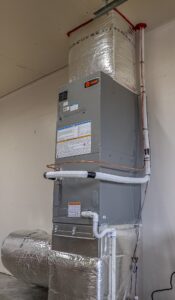
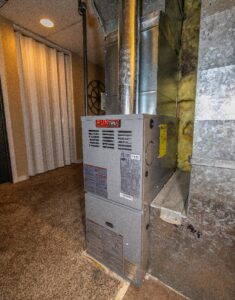
Every furnace has safety switches whose entire job is to shut the system down when something is wrong. The tech tests that those controls actually work. The flue and venting get checked too, so exhaust gases leave the house the way they are supposed to. On high efficiency furnaces (the ones with white PVC vent pipes), the condensate drain gets checked and cleared, because a backed up drain will shut a furnace down to prevent a flood.
Step 7: Electrical and gas connections
Connections loosen over time with vibration and heat cycles. The tech checks electrical connections, measures that components are drawing the power they should, and inspects the gas line connections at the unit. Small problems here are cheap to fix during a tune-up and expensive to ignore.
Step 8: The report, in plain language
The visit ends with a rundown: what looks good, what is wearing, and what to plan for. Wearing is not the same as broken, and a good tech will tell you the difference. Maybe the igniter is showing its age and is worth replacing before it quits on a cold night. Maybe everything is solid for another year. Either way, you should leave the visit knowing where your furnace stands, not just that it was “serviced.”
Quick reference: what gets attention, and why
| Part of the visit | What happens | Why it matters |
|---|---|---|
| Thermostat and full cycle | System run start to finish | Catches short cycling and weak runs |
| Filter | Checked and replaced if loaded | Protects airflow and the blower |
| Blower | Inspected and cleaned as needed | Even heat, lower strain on the motor |
| Burners and ignition | Inspected and cleaned | Reliable starts, clean burn |
| Heat exchanger | Visual inspection | Carbon monoxide safety |
| Safety controls and flue | Tested and inspected | Shutdown protection, safe venting |
| Condensate drain | Checked and cleared (high efficiency) | Prevents shutdowns and water damage |
| Electrical and gas | Connections checked, readings taken | Reliability and safety |
When to stop and call instead
A tune-up is maintenance, not a repair visit. If your furnace is already making banging, squealing, or grinding noises, blowing cool air, or refusing to start, that is a repair call, and it should happen sooner rather than later. Maintenance keeps a healthy furnace healthy. It does not resurrect a struggling one, and any company that promises otherwise is selling you something.
Frequently asked questions
How much does a furnace tune-up cost in Spokane?
It depends on the company and what the visit includes, so ask what is actually checked before you compare prices. One honest comparison: our Comfort Club maintenance plan is $129 a year for furnace only (one visit a year) or $199 a year for a full system (a heating and a cooling visit each year), and members also pay a $25 diagnostic fee instead of $149 if something breaks. Details are at provisionhvac.com/comfort-club.
How often should a furnace get a tune-up?
Once a year, ideally in the fall before heating season gets serious. Spokane furnaces run hard from October through March, and a fall visit catches worn parts while you still have scheduling options, not during the first cold snap when every HVAC company in town is slammed.
How long does a tune-up take?
Plan on about an hour for a thorough visit. If the tech is in and out in fifteen minutes, you did not get a tune-up, you got a wave hello.
What else does the Comfort Club include?
Beyond the visits: 10 percent off repairs, priority scheduling, guaranteed service within 48 business hours, and a Comfort Bank of $250 a year toward a future system replacement. The full breakdown is on the Comfort Club page.
My furnace is pretty new. Does it still need this?
Yes, and for a boring reason: most manufacturer warranties expect regular maintenance. Beyond the paperwork, new systems drift out of adjustment too, and a yearly check keeps a small drift from becoming a midwinter breakdown.
Need a hand with it?
Fall in Spokane is tune-up season for a reason. The first cold snap is coming whether your furnace is ready or not.
Call Provision Heating & Air at (509) 999-4775, Monday through Friday, 7 AM to 7 PM, or send a service request anytime through the form at provisionhvac.com, and we will get your furnace checked before it has to work for a living.